Pope Leo boosts U.S. efforts to abolish the death penalty with inspiring video message
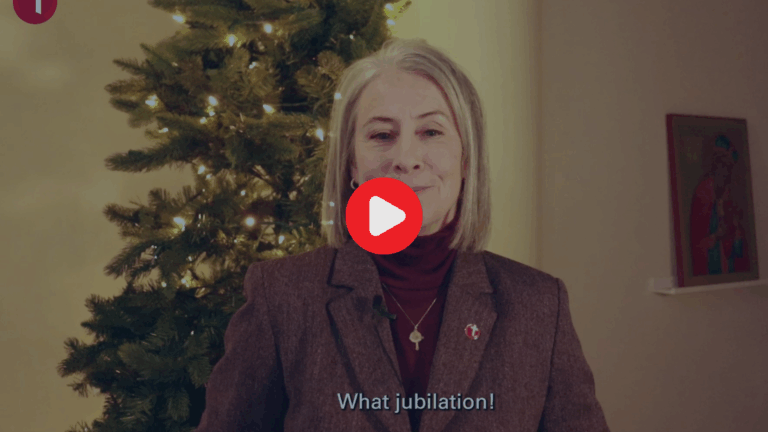
In a surprise video aired at DePaul University today, Pope Leo XIV offered a powerful statement in support for those who advocate for the abolition of the death penalty in the United States:
“I therefore join you in celebrating the decision made by the Governor of Illinois in 2011, and I likewise offer my support to those who advocate for the abolition of the death penalty in the United States of America and around the world. I pray that your efforts will lead to a greater acknowledgement of the dignity of every person, and will inspire others to work for the same just cause. With these sentiments, I cordially invoke upon all of you the divine blessings of wisdom, joy and peace.”
Pope Leo’s remarks underscored the Church’s consistent and clear teaching in opposition to the death penalty saying, “the right to life is the very foundation of every other human right.” This includes, Pope Leo says, instances where grave harms have been committed. Invoking Pope Francis and his recent predecessors, Pope Leo says that “the common good can be safeguarded, and the requirements of justice can be met without recourse to capital punishment.”
The anniversary event hosted at the Chicago-based University, the Illinois birth state of the Holy Father, commemorated the 15th anniversary of the state’s abolition of the death penalty and honored former Illinois Governor Pat Quinn for his role in championing and signing into law this life-saving measure.
Krisanne Vaillancourt Murphy — executive director of Catholic Mobilizing Network — responded to Pope Leo’s remarks saying:
“It was absolutely thrilling to hear the first American Pope’s encouraging words about death penalty abolition efforts in his home state and country!” says Vaillancourt Murphy. “It indicates the closeness of the Holy Father Pope Leo to the Church’s indefatigable work across the nation to end this death-dealing practice. Pope Leo makes it crystal clear that the death penalty is a priority for the universal Church.”
This comes just a few days after Pope Leo spoke at an infamous prison in Equatorial Guinea on the last day of his trip throughout Africa. In the midst of a strong rain storm at Bata Prison, Pope Leo spoke directly to the inmates saying: “Life is not defined solely by one’s mistakes, which are often the result of difficult and complex circumstances. There is always the possibility to start over, learn and become a new person.” Expressing his nearness to these individuals Pope Leo reminded them, “you are not alone.”
“Pope Leo is reminding us of the expansive nature of God’s mercy, the value of human life, and the Gospel call to justice. This can be summed up as he said in Bata Prison: ‘no one is excluded from God’s love!’”
Today’s event was coordinated in collaboration with Sr. Helen Prejean, CSJ — renowned anti-death penalty advocate who was integral to the founding of Catholic Mobilizing Network — whose longstanding relationship with DePaul University included donating her personal archives to the university in 2011, the same year Illinois abolished the death penalty. Reflecting on the realities of the death penalty today, and the progress made by advocates throughout decades, Sr. Helen invoked an image of a burning coal fire. She said, “We gather to blow on those coals today, for that fire of faith and hope, that we don’t have to be a society that kills our citizens; that we can be a society of life across the board – not just for the innocent but for the guilty as well.”
Honoree Gov. Pat Quinn reflected on Illinois’ achievement in abolishing the death penalty and encouraged states across the nation to follow its lead. “We can make the will of the people the law of the land,” he concluded.