Holy Thursday — The Washing of the Feet
By Fr. Andrew Jones | Today’s Readings
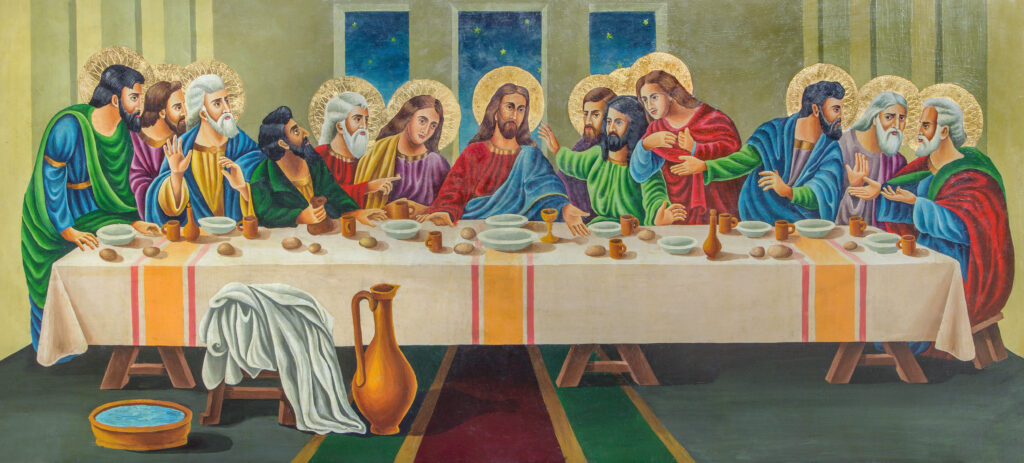
On the night of the Last Supper Jesus did something his disciples did not expect: he adopted the role of servant to wash their feet. This startling act reveals the essence of the New Covenant: God offers intimate communion to all—even to those who will fail him.
Jesus knew what would unfold that night. Peter would deny him. Judas would betray him. The others would also abandon him. Yet Jesus washes their feet anyway. In doing so, he reveals something essential about God: communion is offered before repentance or loyalty can even be proven. God does not wait for perfection before drawing near.
The covenant relationship God offers humanity does not shrink in the face of failure. Scripture uses the Hebrew word חֶסֶד (hesed), often translated as “steadfast love,” to describe the Divine posture. God remains faithful even when his people are not. He stays in relationship even when it has been wounded by sin, always seeking the restoration of communion.
Jesus’ posture while washing the feet of his disciples also reveals something about restoration itself: it requires vulnerability. Kneeling before his disciples, Jesus places himself in a position where his offer of service can be misunderstood or even rejected. Peter does exactly this, refusing at first to let Jesus wash his feet. Yet Jesus does not withdraw from Peter’s resistance. Instead it becomes an invitation to communion: “Unless I wash you, you have no share with me” (John 13:8).
After washing their feet, Jesus tells them: “If I, your Lord and Teacher, have washed your feet, you also ought to wash one another’s feet… I have set you an example” (John 13:14–15). His disciples—and by extension all disciples of Christ—are called to imitate this same posture.
For Catholics, this means remaining in relationship with those who have done wrong or caused harm, refusing to abandon them. Justice shaped by the Gospel seeks accountability, but also healing and the restoration of communion. Jesus models this with his own disciples through the washing of their feet which is an example of humble service, steadfast commitment to relationship, and even an anticipation of reconciliation after betrayal and death.
Such a posture can shape our approach to the criminal justice system. It can influence our ministry with those who are difficult to work with due to their own wounds. Our mission at the City of St. Jude Parish is “to provide hope to the hopeless,” and very often those who are the most hopeless suffer from a lack of steadfast love in their lives. They feel cut off from family, from society, and even from God. In working towards Gospel-centered forms of justice we too can follow the example of Jesus who leads by example.
Reflection Questions:
- What could “washing feet” look like for you in your own family, ministry, workplace, and parish?
- How does the example of Jesus washing the feet of his disciples illustrate the concept of restorative justice?

Fr. Andrew B. Jones
Fr. Andrew Jones is the pastor of The City of St. Jude Parish in Montgomery, AL. The City of Saint Jude Parish provides hope for the hopeless by proclaiming to everyone they encounter that no-one is truly without hope who has a relationship with the Lord Jesus Christ.
Read more reflections for Holy Week 2026.
Palm Sunday — “Crucify Him!”
Palm Sunday — “Crucify Him!” By Sr. Theresa Aletheia Noble | Today’s Readings All four Gospels recount a haunting moment in Jesus’ passion: the crowd’s cry, “Crucify him!” The same voices that once shouted “Hosanna” now demand his death. It’s not just a historical detail; it reveals the indecisive cowardice of the human heart. And…Good Friday — Who will you be?
Good Friday — Who will you be? By Emmjolee Mendoza Waters | Today’s Readings I remember enjoying Holy Week as a kid. While the readings were long, I actually looked forward to them, especially waiting for the bolded lines in the missal so I could jump in with everyone else. I got to speak with…